
Ramp Racing 3D — Extreme Race
CASUAL AZUR GAMESRacing
3.652.00 Reviews
- Version
- 5.23
- Installs
- 10.00M
- Age Rating
- Everyone
Screenshots
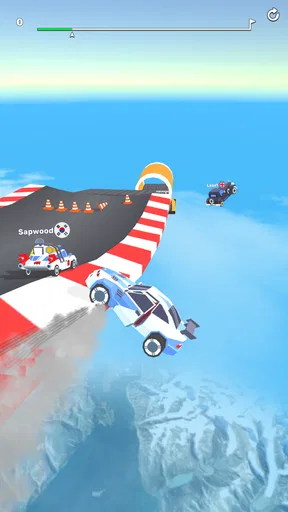
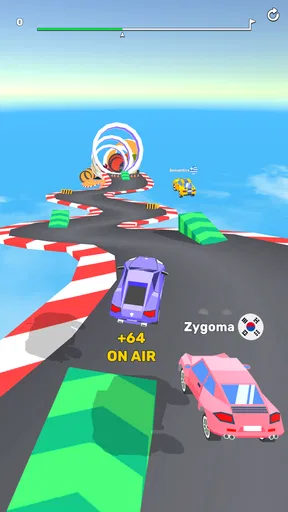
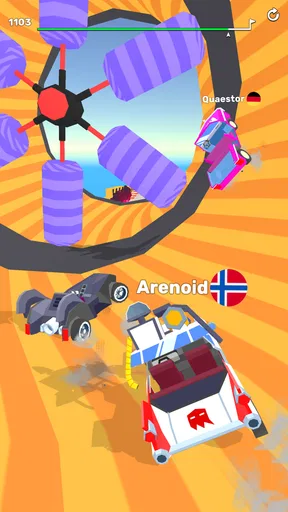
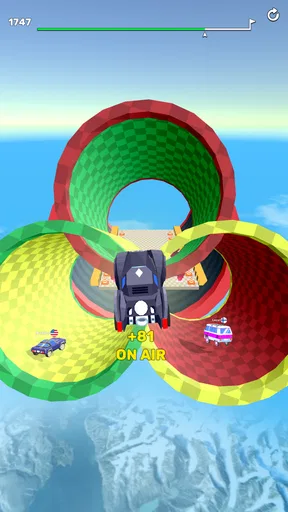
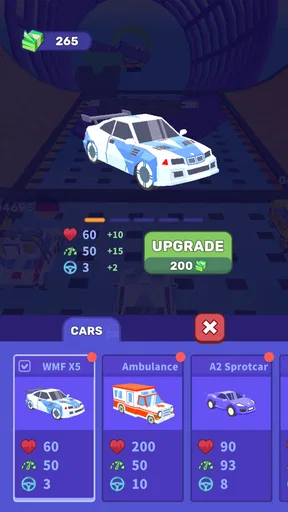
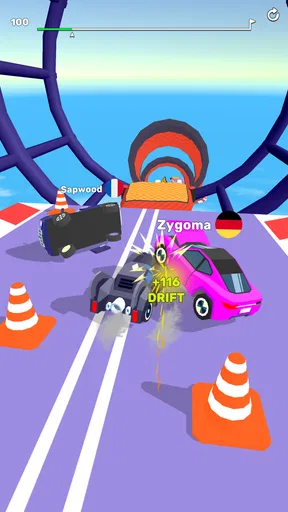
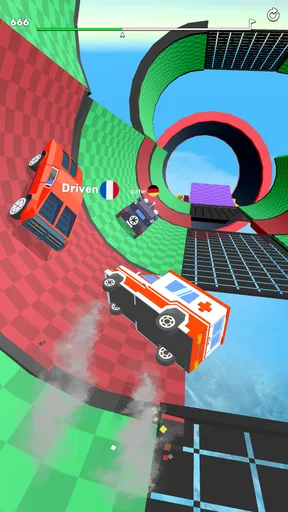
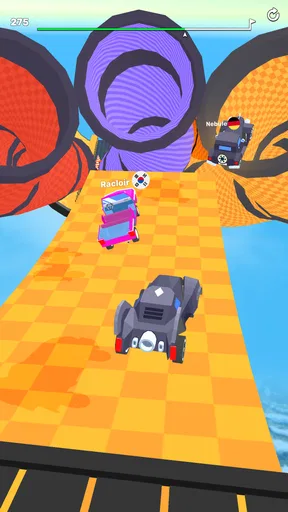
Our Review of Ramp Racing 3D — Extreme Race
 Analysis by Appyee
I spent time with Ramp Racing 3D — Extreme Race as a quick-play racing game, and its appeal became clear almost immediately: it asks me to control a car through stunt-heavy courses where a single bad landing can ruin an otherwise good run. It is free to play, aimed at Everyone, and comes from CASUAL AZUR GAMES. Rather than presenting itself as a serious driving simulator, it focuses on short bursts of movement, jumps, ramps, and the simple satisfaction of reaching the finish without crashing.
That makes it easy to understand, but not automatically easy to master. The opening minutes are friendly enough for a casual player, while later attempts demand better timing and more patience. I found the best way to approach it was not as a realistic racing game, but as a reflex challenge with racing decoration: the important question is often not how fast I can go, but whether I can keep the car stable when the track suddenly sends it into the air.
How the early goals make each run understandable
The first useful goal is simply learning how the car behaves. I had to get comfortable with acceleration, steering, jumps, and landings before worrying about perfect runs. That early learning loop works because the objective is visible: stay on the track, avoid the crash, and reach the end. There is no need to study a complicated garage or memorize a large collection of controls before playing.
This simplicity is especially helpful on a phone. I can pick it up while waiting for an appointment or during a short break and understand what I am supposed to do within moments. The game’s short-race structure also means a failed attempt does not feel like losing a long session. I can try again quickly, which is important because many mistakes come from one poorly judged jump rather than from a lack of general understanding.
My practical advice is to treat the first few attempts as driving practice rather than as races that must be won. Watch how much the vehicle moves in the air, notice how sharply it responds near edges, and resist the instinct to make constant corrections. Oversteering is often more damaging than a small mistake because a correction that begins as a rescue can turn into a spin or a missed landing.
The early goals are therefore clear, but they are also deliberately narrow. Players looking for a broad career mode, licensed vehicles, or a detailed racing simulation may find the opening too lightweight. The game is strongest when I want immediate action, not when I want a long-form motorsport experience with strategy outside the track.
Why landing matters more than raw speed
The stunt-focused design changes the usual racing priority. In a conventional circuit racer, carrying speed through a corner is often the main skill. Here, speed only helps if the car arrives at the next surface in a controllable position. A fast approach to a ramp can produce a spectacular jump, but an awkward angle on the way down can erase the advantage.
I found it useful to make small steering adjustments before takeoff instead of trying to correct everything during the jump. Once the car is airborne, dramatic movements are usually a gamble. A calmer approach also makes the course easier to read: I can focus on where the tires should meet the track rather than reacting to every moment of motion.
This is one of the game’s more interesting trade-offs. Playing aggressively can make a successful run feel exciting, but playing cautiously is often the better route when the immediate goal is simply to finish. That gives the early stages a modest layer of decision-making without turning the game into a complicated strategy title.
Progress signals that keep attempts meaningful
Progress in a game like this is felt through improved control as much as through any visible reward. I began by celebrating a clean finish, then started caring about smoother landings and fewer recoveries. Those are small signals, but they matter because the game’s challenge is built around repeating similar actions with better timing.
The current version is 5.23, and the game has reached over ten million installs, so it clearly has the broad reach expected from a mobile arcade racer. Its average rating is 3.6 from around five thousand ratings, which matches my impression that the concept is accessible but will not satisfy everyone equally. Players who enjoy quick stunt attempts can settle into the rhythm, while people who need deep progression or highly precise simulation may judge it more harshly.
I would not use the install count as proof that it is the right choice for every racing fan. It tells me the format has found a substantial audience, but the more useful question is what kind of progress I personally want. If I measure progress by learning a track’s rhythm and reducing careless crashes, the game gives me something to work toward. If I expect a detailed collection system or a long-term competitive ladder, I should look elsewhere.
One helpful habit is to separate a “completion run” from a “practice run.” On a completion run, I use conservative steering and accept a slower approach if it improves the landing. On a practice run, I deliberately test a faster jump or a tighter line. This prevents every failure from feeling pointless, because I know whether I was trying to finish or gathering information.
The difficulty curve rewards patience, not button mashing
The challenge becomes more noticeable when the track stops feeling like a straight path from one ramp to the next. The same basic controls can produce very different results depending on approach angle, timing, and how much momentum the car carries. I had to stop assuming that holding a direction longer would reliably solve a problem. In many situations, the correct response is a brief adjustment followed by leaving the car alone.
That creates a gentle but real difficulty curve. The game does not require racing knowledge, yet it does punish careless repetition. If I keep making the same correction at the same point, another attempt will probably end in the same way. The useful improvement comes from changing one part of the approach: slowing slightly, lining up earlier, or avoiding a last-second steering movement.
The difficulty can still feel abrupt when a run fails after a promising sequence of jumps. That is the main friction for me. Because the controls are simple, a crash may feel less like a complicated mistake and more like an unforgiving moment. Players who enjoy retrying a short challenge will probably accept this. Players who prefer forgiving progress may find the repeated resets irritating.
For everyday play, I recommend using short sessions instead of forcing a long run. After several failed attempts, my reactions became less careful and I started making corrections too late. Taking a break and returning later was more effective than continuing to push through frustration. This is a small point, but it fits the game well: its courses are quick enough that a fresh attempt often teaches more than a tired one.
Where it differs from ordinary racing alternatives
Compared with a traditional circuit racer, this game puts less emphasis on overtaking, braking strategy, and realistic cornering. The central drama is the stunt course itself. That makes it easier to start than a simulation-style racer, because I do not need to learn a large set of driving techniques. It also makes each mistake more visually obvious: a missed landing is a direct consequence of the moment rather than a slow loss of position over several laps.
Compared with a full arcade racing game, it feels narrower and more focused. I get the immediate pleasure of ramps and jumps, but not necessarily the same sense of a complete racing world. That is not a flaw for a player who wants a compact challenge. It becomes a limitation for anyone who expects extensive customization, a deep vehicle roster, or a persistent competitive structure.
In my view, the best alternative depends on the kind of attention I have available. For a few minutes of hands-on play, Ramp Racing 3D fits better than a more demanding racer that needs a long uninterrupted session. For a serious racing mood, a conventional arcade racer or simulator would offer more depth and more control over the driving experience.
Retention pressure and the cost of continuing
The game is free to download, but in-app purchases are listed at $3.99 per item. That places an important boundary around the experience for me: I can try the core racing without paying upfront, but I should still decide whether optional spending fits my habits before getting deeply invested. I would not treat a purchase as a substitute for learning the tracks. Better timing is more valuable than rushing to spend money after a frustrating crash.
The retention comes mainly from the desire to improve the next attempt. A successful run can make me curious about whether I can repeat it with fewer mistakes, while a failure invites an immediate retry. This is a useful loop when the challenge feels fair. It becomes pressure when I keep restarting without changing my approach, because repetition alone does not guarantee progress.
I also think the free format makes the game more suitable for casual players than for people who dislike any form of monetized mobile design. Someone who wants a one-time purchase with a completely settled structure may prefer a premium racing title instead. Someone comfortable with a free download and optional items can sample the game first and decide whether its short stunt races deserve regular space on the phone.
Another practical consideration is age suitability. The Everyone rating makes it a broadly approachable choice for families, although younger players may still need help understanding that a crash is part of the learning process rather than a reason to keep making frantic inputs. The controls are simple enough to demonstrate, and an adult can quickly explain the main lesson: line up before the jump and avoid overcorrecting in the air.
Who will enjoy it, and who should skip it
I would recommend it to players who like arcade racing, stunt ramps, quick retries, and visible improvement through practice. It is a good fit for someone who wants a game that can be understood immediately but still asks for better timing after the novelty of the first jumps fades. It also suits people who enjoy testing their own consistency more than managing a large collection of cars or tuning detailed statistics.
I would be more cautious about recommending it to players who need realistic handling. The game’s appeal is exaggerated movement and compact challenge, not the feeling of driving a genuine road car. I would also point simulation fans toward another option if they want detailed braking, tire behavior, or strategic race positioning. Likewise, players who become annoyed by repeating short attempts after a crash may not enjoy its central loop.
For a realistic everyday scenario, I can imagine playing it on a commute while standing safely in one place, during a short lunch break, or while waiting for a friend. I would use headphones only if I wanted extra focus, keep the session brief, and stop after a few unproductive retries. It works particularly well as a “one more attempt” game, but that same quality can make time disappear if I do not set a natural stopping point.
My progression verdict
After reviewing the way its goals, progress signals, difficulty, and retention fit together, I see Ramp Racing 3D as a focused arcade racer rather than a complete racing platform. Its strongest progression is personal: I learn how to approach ramps, control momentum, and land with fewer corrections. That is enough to sustain play for people who enjoy mastery in small steps, but it may feel thin to players who expect a long list of unlocks or a rich career.
The game’s best quality is its clarity. I always understand what went wrong, even when I do not immediately know how to fix it. The most effective improvement is usually concrete: adjust earlier, reduce unnecessary steering, or choose a safer approach. That makes failed runs useful instead of completely random.
Its main weakness is that the same simplicity can limit its staying power. Once the basic stunt format is familiar, the game has to rely heavily on course variety and my willingness to repeat attempts. If that loop matches my taste, the short races are convenient and satisfying. If I need broader systems around the racing, the experience will probably feel modest beside larger alternatives.
Overall, I would install it for quick, accessible stunt racing and recommend giving it a fair trial before deciding whether it belongs in a regular rotation. The free entry point lowers the risk, the Everyone rating makes it broadly approachable, and the controls are easy to pick up. Just keep expectations in the right place: this is about surviving ramps and improving landings, not building a full motorsport career. For me, the real progression is turning chaotic jumps into controlled finishes.
Verdict
Strengths of Ramp Racing 3D — Extreme Race
- Simple controls make it easy to start racing immediately.
- Short tracks are ideal for quick gaming sessions.
- Bright 3D visuals make obstacles easy to recognize.
- Vehicle upgrades add a sense of progression.
- Offline play is convenient when no connection is available.
Limitations of Ramp Racing 3D — Extreme Race
- Gameplay can become repetitive after completing several tracks.
- Difficulty spikes may make some levels feel frustrating.
- Ads can interrupt the experience between races.
- Vehicle customization options are relatively limited.
- Physics occasionally feel inconsistent during jumps and landings.
Other Releases by CASUAL AZUR GAMES
View All
Worms Zone .io - Hungry Snake
Action4.3

Stack Ball - Crash Platforms
Arcade4.5

STAR: Super Tricky Amazing Run
Arcade4.2

State.io — Conquer the World
Strategy4.1
Similar Picks in This Category
View All
Hill Climb Racing
Fingersoft4.3

Dr. Driving
SUD Inc.4.2

Traffic Rider
skgames4.5

Asphalt 8 - Car Racing Game
Gameloft SE4.6

Race Master 3D: Car Racing
Beresnev Games4.6

Extreme Car Driving Simulator
AxesInMotion Racing4.3
Frequently Asked Questions
What is Ramp Racing 3D — Extreme Race?
Ramp Racing 3D — Extreme Race is an arcade-style driving game focused on performing daring jumps, navigating elevated tracks, and reaching the finish line without falling. The game combines simple controls with obstacle-filled ramps, sharp turns, gaps, and stunt-style challenges. It is designed for quick sessions and casual play rather than realistic driving simulation, making it accessible to players who enjoy fast, exaggerated racing action.
How do you play Ramp Racing 3D — Extreme Race?
Gameplay is generally easy to understand: control your vehicle, keep it balanced on narrow ramps, avoid obstacles, and collect enough speed to clear jumps. Depending on the stage, careful steering is often more important than driving at maximum speed. I found that small adjustments work better than sudden movements, especially on suspended tracks. Completing levels successfully usually allows you to progress through more difficult courses.
Is Ramp Racing 3D — Extreme Race free to download and play?
The game is typically available as a free download, allowing players to try its core racing and stunt challenges without paying upfront. However, free mobile games may include advertising, optional purchases, or both. These can vary according to the version, device, region, and developer updates. Before installing, it is worth checking the store listing for current information about ads, in-app purchases, permissions, and supported devices.
Does Ramp Racing 3D — Extreme Race require an internet connection?
An internet connection may not be necessary for every basic gameplay session, particularly if the installed version supports offline level play. Nevertheless, connectivity can be required for advertisements, updates, analytics, online features, or restoring purchases. I recommend launching the game once while connected, then testing it in airplane mode if offline access is important to you. Features and requirements can change after updates.
Is Ramp Racing 3D — Extreme Race suitable for children and casual players?
The straightforward controls and short levels make Ramp Racing 3D — Extreme Race approachable for casual players, including users who do not usually play complex racing games. Still, parents should review the store age rating and advertising information before allowing younger children to play. Repeated falls and challenging ramps can become frustrating, while advertisements or optional purchases may also affect the experience depending on the version installed.
Play our best games!


